

Mindworking Asia is a high-end hybrid image and video post-production partner for brands, retailers, marketplaces, studios and agencies. We combine experienced production teams, automation and AI-supported workflows to deliver accurate, consistent and publishing-ready content at scale.
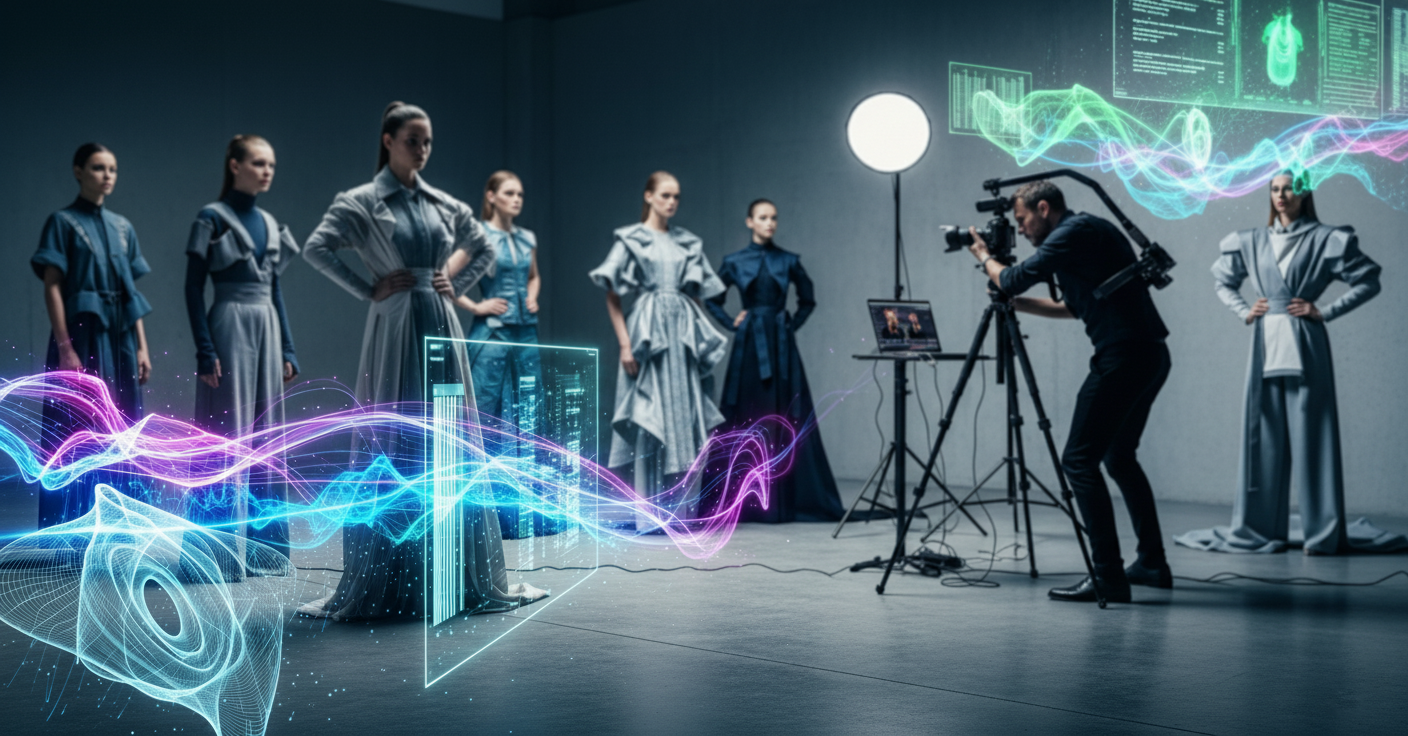
The strongest model combines studio production, skilled post-production, AI-supported technology and human quality control. This has become the working approach of a growing number of sophisticated fashion, retail and lifestyle brands.
Content production for e-commerce has grown more demanding. Brands and retailers are managing larger product ranges, more markets, more channels and more content formats than they were five years ago. At the same time, the technology available to production teams has changed significantly.
The question is not whether AI belongs in a production workflow. For many brands and studios, it already does. The question is how to integrate it without compromising the accuracy, brand consistency and commercial usability that the content is supposed to deliver.
What a Studio Actually Produces
Depending on workflow, shot list and product complexity, a well-run fashion studio may produce approximately 60 to 80 on-model SKUs per day. That figure reflects the physical and logistical reality of studio production: dressing, styling, shooting and reviewing takes time regardless of how efficient the team is.
The output from a studio day represents significant commercial value. Getting the post-production right is as important as getting the photography right. An image that is technically well-produced but colour-inaccurate, anatomically unconvincing or poorly finished will underperform on the PDP regardless of how it was created.
The Hybrid Model in Practice
The hybrid content model brings together three elements: studio production and creative direction, specialist image and video post-production, and AI-supported workflows where they add genuine value.
AI is most effective in production when it operates inside a controlled workflow. That means starting from approved product assets, applying validated techniques and subjecting every output to human quality review before delivery. This model works best for clients with recurring production requirements where consistent quality standards must be maintained across every batch. That means starting from approved product assets, applying validated techniques and subjecting every output to human quality review before delivery. Where those conditions are met, AI can extend what a production team produces and reduce the cost of doing so. Where they are not met, AI introduces risk.
More informative and accurate product content can support conversion, strengthen customer confidence and help reduce avoidable returns caused by mismatched expectations. These outcomes depend on the quality and accuracy of the content, not on whether AI was used to produce it.
The Role of Post-Production
Post-production is where studio output becomes commercially usable content. Accurate colour, clean product presentation, consistent cropping and alignment, and correct technical preparation for marketplaces and platforms are not optional finishing steps. They are what makes the difference between content that performs and content that does not.
The same standard applies to AI-generated content. AI can create a first output. Specialists are needed to correct it, validate it and confirm that it meets the required commercial and brand standard before it goes anywhere near a PDP.